

In any emergency – whether it’s a flood, fire, storm or pandemic – adults instinctively go into problem-solving mode. We check alerts, grab essentials and batten down the hatches. Preparing for the worst often gives us a sense of purpose and security amidst the unknown.
But for children, the experience can be confusing and frightening. They might not understand what’s happening or why the grown-ups around them are suddenly serious and tense.
Helping children feel safe during a crisis is just as much about supporting their emotional wellbeing as it is about keeping them physically protected. The way adults speak, act and respond can shape how children cope not just in that moment, but in how they process fear and uncertainty long after the crisis is over.
Here’s how you can help children understand, stay calm and recover from emergencies.
Tell them the truth, but keep it simple
Children notice far more than we realise. If they sense that something serious is happening but don’t understand what it is, their imagination can fill in the gaps with scarier ideas than the reality of the situation.
Use clear, age-appropriate language to explain what’s happening. You might say, “There’s a big storm coming, so we’re moving inside where it’s safe,” or “There’s a fire nearby, so the firefighters asked everyone to leave until they can make sure it’s safe again.”
Avoid overloading them with details. Short, calm explanations paired with reassurance help children feel informed but not overwhelmed.
Model calm behaviour
Children take their emotional cues from the adults around them. Even if you’re anxious, try to keep your voice steady and your body language relaxed. Moving with purpose and speaking gently can make a huge difference to how secure a child feels.
If you’re in a workplace or community setting, remind everyone that children are watching and listening. A calm, organised atmosphere helps them trust that the adults are in control.
It’s OK if you don’t handle everything perfectly – you’re only human. But if you or someone else loses their cool, take the time to explain to children that it was a passing moment of stress and they’re safe.
Involve them safely in preparation or response
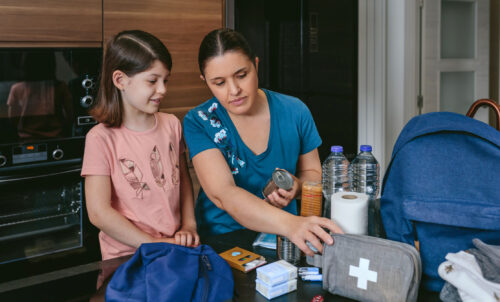
Giving children a role – however small – helps them feel less powerless. Let them pack a comfort item, hold a flashlight or help you gather supplies. You could say, “Can you help me check that we’ve got your teddy and some water in the bag?”
During the event, small responsibilities like holding hands during an evacuation or counting people as they assemble can help kids focus and feel useful. The key is to involve them in safe, manageable ways that reinforce teamwork and calm.
Protect their sense of safety
If you’re sheltering during a storm or waiting out a power outage, create a small “safe zone” where children can sit, play quietly or rest. Familiar routines such as reading a favourite story, listening to music or drawing can help distract them and restore a sense of normality.
Physical comfort matters too. A warm blanket, snack or cuddle can do wonders to soothe anxious feelings. Children often express fear through behaviours like clinginess, irritability or silence, so patience and reassurance can go a long way.
Limit exposure to distressing media
In the age of 24-hour news and social media, it’s easy for children to be exposed to confronting images or conversations. Turn off or mute live coverage while they’re around. If older children ask to see what’s happening, watch together and help them interpret it. Try to emphasise the people helping and the progress being made rather than the destruction or worst case scenarios.
Encourage open discussion afterwards. Ask how they feel about what they’ve seen and gently correct any misunderstandings or exaggerated fears.
Reconnect after the event
Once the immediate danger has passed, children may continue to feel uneasy or have questions. Take time to talk about what happened in a calm, supportive way. You might start with, “That was a big storm, wasn’t it? How did it make you feel?”
Listen carefully and validate their emotions – whether they felt scared, angry or confused. Let them know those feelings are normal and that it’s okay to talk about them.
If routines were disrupted, getting back to regular meal, play and sleep times will help re-establish a sense of stability. In workplaces or community organisations, consider hosting a short debrief or group activity where families can share experiences and children can see others recovering too.
When to seek extra help
Most children bounce back well after an emergency once they feel safe again. But if fear or distress linger in the form of nightmares, anxiety or other concerning behaviours, it may help to talk with a school counsellor, psychologist or trusted health professional.
The earlier children get support, the sooner they’re likely to regain their sense of control and confidence.
Your calm is their comfort
Children don’t need us to have all the answers, but they do need us to help them feel safe. When adults stay steady and reassuring, it sends the message that even in chaos, there’s security and love.
Emergencies can shake our sense of normal, but they can also show children something powerful: that people come together in times of crisis, help one another and rebuild. That’s a lesson in resilience they’ll carry for life.
www.myeverydaywellbeing.com










 English
  Shqip
Shqip  简体中文
简体中文  Nederlands (Formeel)
  Deutsch (Sie)
  हिन्दी
  Bahasa Indonesia
  Italiano
  日本語
日本語  Bahasa Melayu
  Português
  Español
  ไทย
ไทย  Türkçe
  Maori
Maori  Gagana Samoa